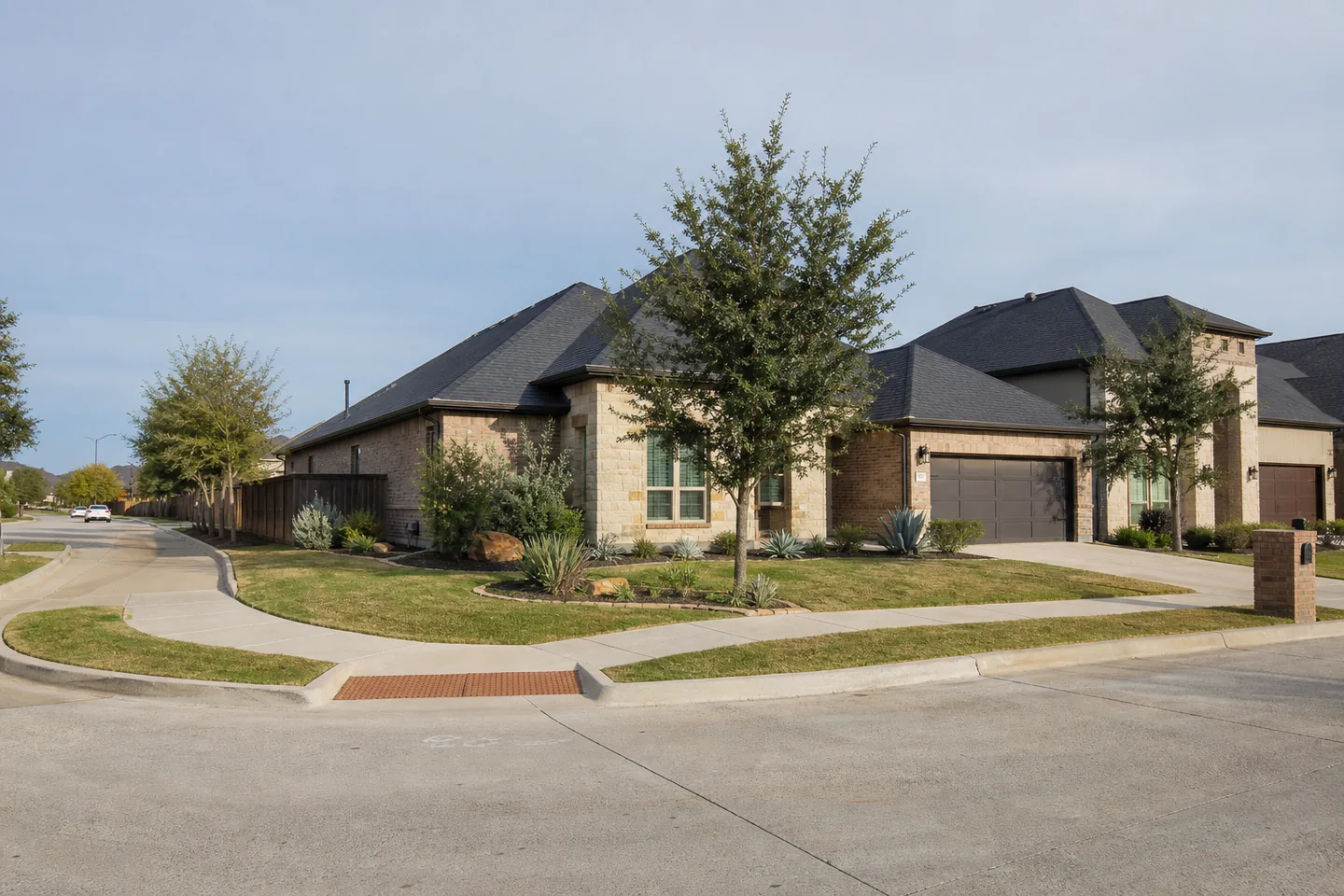
Frisco’s current Zillow ZHVI typical city home value is $656,145, while ZORI typical observed city market rent is $1,861 per month. That produces a 3.4% gross yield before every operating cost, financing and vacancy. The ZHVI is 4.37x ACS median household income, and annualized ZORI equals 14.9% of that income. These citywide benchmarks frame affordability but do not establish a property’s achievable rent or return.
ACS city survey context counts 80,353 housing units; renters occupy 34.1% of occupied units, and 3.9% of all units are vacant. Its $642,100 median home value describes surveyed owner-occupied housing, while its $2,014 median gross rent covers occupied rentals and includes selected utilities. Those measures differ in sample, concept and period from Zillow’s typical home value and observed market rent, so they should not be averaged or treated as a single pricing series.
Direct city depth is mixed: ACS shows 45.1% of renters meet the rent-burden threshold, while single-family units are 72.5% of stock and large multifamily units are 21.1%. Among vacant units, 33.9% are classified for rent. Population is 219,304, up 23.9% between overlapping ACS vintages; the comparison is neither annualized nor an event count, and boundary changes may contribute. City ACS median household income is $150,212, with city ACS poverty at 3.6% and city ACS unemployment at 4.55%. These survey facts describe citywide constraints and stock but do not identify available investment inventory, tenant quality or lease-up speed.
Wider evidence should remain separate because Frisco crosses county lines. Collin County context shows a 50-day median market time and a 29.3% price-reduced share; Denton County context separately shows a 47-day median market time and a 28.5% price-reduced share. The broader Dallas metro context records 0.8% year-over-year job growth, a labor indicator rather than a Frisco employment measure. The national Freddie Mac mortgage rate is 6.58%, which informs financing conditions but does not represent any borrower’s quote.
Underwriting remains limited by citywide aggregates, cross-source timing, survey error and the absence of property-specific taxes, insurance, association dues, maintenance, management, concessions, capital work and financing terms. Next, verify the target’s legal use, current condition, comparable asking and signed rents, utility responsibility, actual vacancy and turnover, tax parcel and county assignment, insurance quote, flood and hazard exposure, and a full operating statement. Stress-test cash flow rather than treating gross yield or city vacancy as net performance.